Fell & Sell How to Sell Items
Master the economics. Every price tag is a decision.
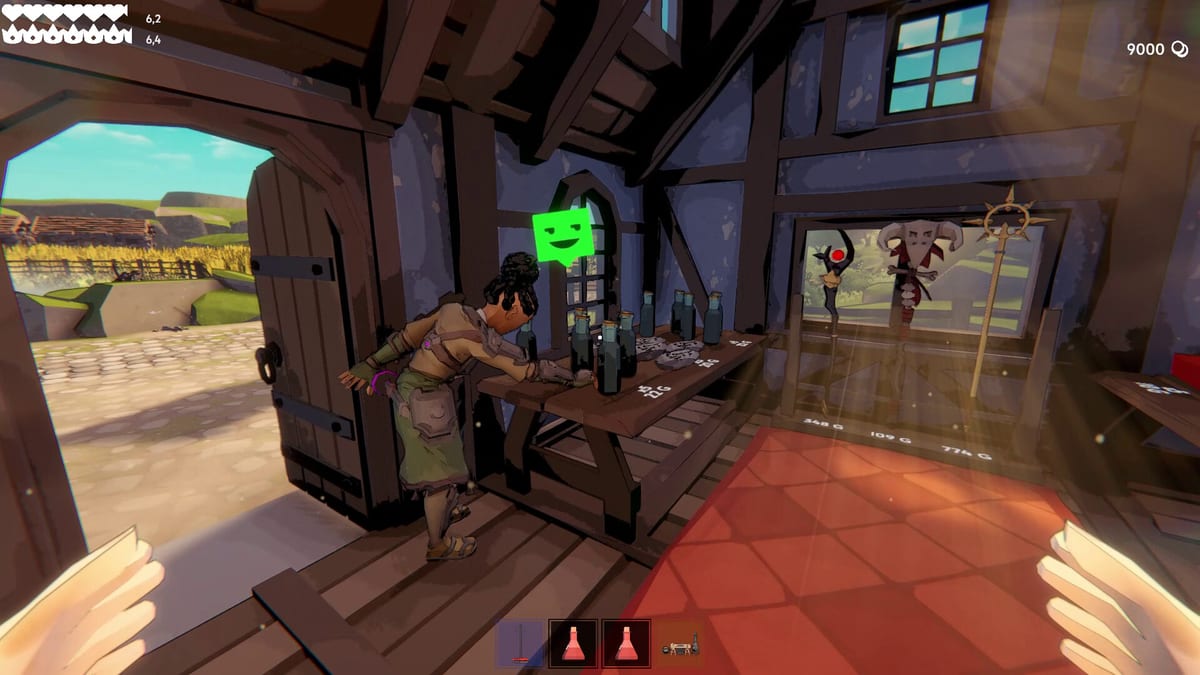
Setting a price in Fell & Sell is never arbitrary. The game models real market dynamics: what customers will pay depends on supply, demand, your shop is prestige, and the decoration bonuses you have accumulated. Understanding this system is the difference between a shop that barely breaks even and one that prints gold.
The pricing formula
Every item in your shop is evaluated by the customer AI using this approximate formula:
Final Price = Base Value x (1 + Prestige Bonus) x (1 + Decoration Bonus) x Demand Multiplier x (1 - Excess Penalty)
Breaking that down:
Base Value is the item is inherent worth, determined by rarity and type. Weapons and armor have higher base values than raw materials.
Prestige Bonus scales with your shop is overall reputation. Higher prestige means customers are willing to spend more on everything. Prestige grows with total sales volume over time.
Decoration Bonus is specific to the item category. A weapon display rack boosts the perceived value of weapons specifically. This bonus can be substantial — well-decorated shops earn 30-50% more on equivalent inventory than bare shops.
Demand Multiplier reflects current market conditions. If many players have been selling swords recently, the demand for swords drops and so does the multiplier. This is invisible to you but observable through sales velocity — if items sit on your shelf longer than usual, demand has likely dropped.
Excess Penalty kicks in when your shop is saturated with a particular item type. If you have twelve swords on the shelf, each additional sword sells for less. Spreading inventory diversity across categories avoids this penalty.
Reading the market
Watch what sells and how fast. A sword that used to sell in one session and now sits for three is signaling that supply is high or demand has dropped. Adjust by either reducing prices or holding that item type until the market shifts.
Some items have naturally high demand — consumables, basic armor, entry-level weapons. These are your steady earners. Rarer items sell less frequently but at higher margins. A balanced inventory mix is more stable than a specialized one.
Decoration strategy
Decoration is not just cosmetic. The right decor provides category-specific price bonuses that directly multiply your income. Prioritize decor that matches your inventory mix. If you sell mostly weapons, invest in weapon displays before anything else.
See the Decoration Buffs guide for the full list of decor and their bonuses.
Pricing tactics
Underpricing builds reputation quickly and generates fast gold turnover. Use this strategy when you are new and need customer flow to grow prestige.
Premium pricing works for rare items and when your shop has high prestige. Customers with money spend it freely. Do not underprice a legendary drop just because you are nervous about it sitting.
Dynamic pricing — adjusting prices based on what is and is not selling — is the advanced technique. Check your shelf between runs. If something has been sitting, either reduce the price or wait for demand to naturally recover.
Common mistakes
Pricing everything at a flat markup is the most common error. A 50% markup on a raw material might be appropriate; the same 50% markup on a rare crafted item might leave money on the table. Evaluate each item individually.
Another frequent mistake: not adjusting prices after decoration upgrades. When your decoration bonus increases, your effective margins increase even at the same price tag. Raise prices accordingly to capture that value.
Related guides
The Pricing Guide in the Shop hub has a deeper dive on the exact formula components.
The Decoration Buffs guide covers which decorations provide which bonuses.
The How to Make Money guide places pricing within the broader economic strategy.
Preguntas frecuentes
Respuestas rápidas a las dudas más habituales.
Should I price items higher when I have high decoration bonuses?
Yes. When your decoration bonus increases, raise prices proportionally to capture the extra margin. Your customers are literally more impressed by your shop and will pay more without complaining.
What if my items are not selling?
First, check if you have too much inventory of that type (excess penalty). Second, observe how long comparable items take to sell — if the whole category is slow, demand has dropped. Either wait or reduce price slightly.
Is it better to have many cheap items or few expensive ones?
A mix is best. High-volume cheap items build prestige quickly through sales frequency. Expensive items provide large single transactions. Both contribute to shop growth in different ways.
Do NPC customers ever refuse to buy?
Yes — if your price exceeds what they are willing to pay for that item in the current market, they will not buy. This is why monitoring sales velocity and adjusting prices matters.