Fell & Sell Dungeon Guide
Descend. Loot. Escape. Repeat.
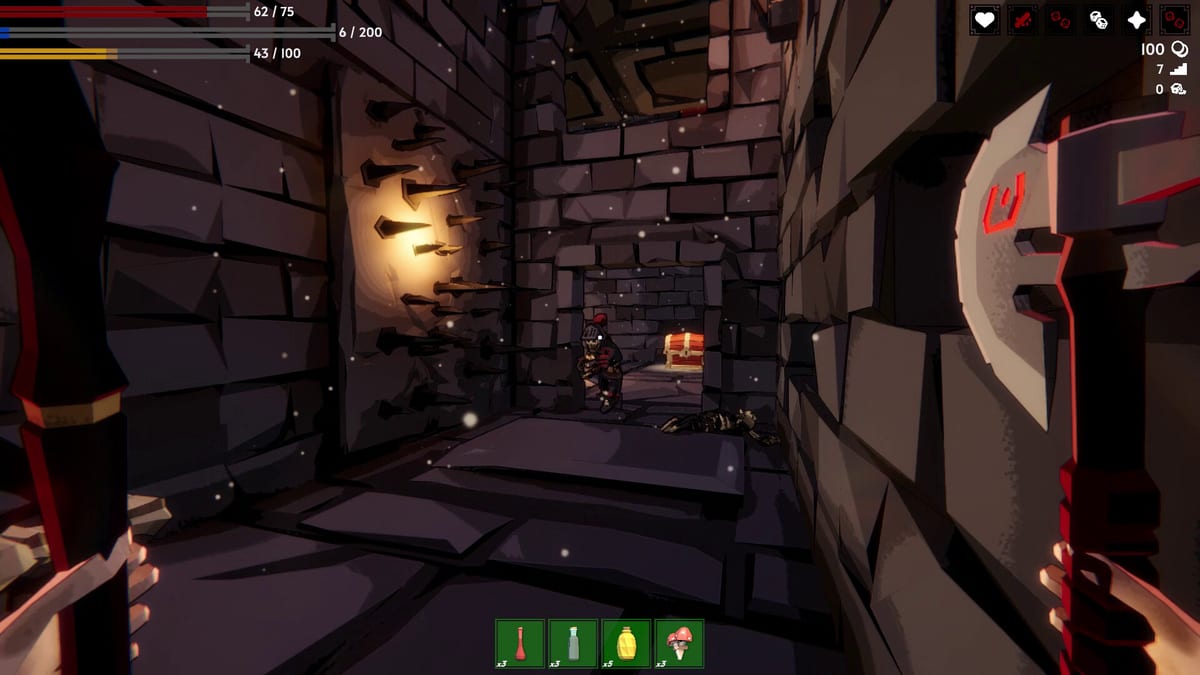
The dungeon is the engine room of Fell & Sell. Every valuable item in your shop started as loot carved from the bodies of skeletons and worse. This hub covers the three pillars of successful dungeoneering: enemies, altars, and loot.
Biomes and bosses
The full game is three underground layers, not a single ten-floor ladder with a gear score gate. Dungeon Biomes covers Shallow (skeletons), Overgrown (goblins), and Darkest (necromancers and armored undead). A boss ends each zone. The Living Forest is a separate outdoor loop — see Forest Foraging.
Enemy types
The dungeon throws waves of skeletons and monstrous foes at you. The Enemies guide profiles every enemy type, their attack patterns, health pools, and the most effective counters for each. Know your enemy before you commit to a floor.
Altar system
Dungeon altars let you radically alter your playstyle mid-run. The Altars guide covers every altar effect — shrinking to dodge massive attacks, melting items into gold with the Midas Touch, cycling through manic and depressed combat states — and how to build around them.
Loot rarity
Deeper floors mean rarer loot. The Loot and Rarity guide explains the rarity tiers, which items are worth dragging out versus selling on the spot, and how to manage your limited inventory space during a run.
Run planning
The Dungeon Survival guide under the Guides hub covers the practical side — how many floors to push, when to bank your haul, how to handle the death penalty, and the mental game of risk versus reward.
Cross-links
The three dungeon sub-pages — Enemies, Altars, and Loot and Rarity — are fully cross-linked and meant to be read together for a complete picture of dungeon strategy.
Dungeon depth and progression
The dungeon spans ten primary floors, each progressively harder than the last. Floor 1 through Floor 3 constitute the early game — manageable with starter gear, teaching core combat, and forgiving of mistakes. Floor 4 through Floor 6 introduce elite enemies, altar interactions, and meaningful risk. Floor 7 through Floor 10 are the late game, where survival requires proper build planning, upgraded gear, and confident mastery of every combat system.
Each floor has a recommended gear score displayed at the entrance. This is a rough guide, not a hard gate — skilled players can push beyond their gear level, and even well-equipped players can be overwhelmed by poor decisions. Use the gear score as a planning tool, not a hard ceiling.
Escaping the dungeon
You can leave the dungeon at any time by finding the exit portal on each floor. Items in your inventory when you exit are banked automatically. If you die, everything you were carrying is lost. The decision of when to exit is the central strategic tension of every run — one more floor means better loot, but also a greater chance of losing everything.
The exit portal on each floor is generally located near the stairs down to the next floor. This creates a natural decision point: go down to the harder floor and risk your current haul, or take the safe exit and bank what you have.
Dungeon currencies and resources
Gold is the primary currency earned in the dungeon. Beyond gold, you find crafting materials, equipment to use or sell, and occasional rare items with no immediate use but high resale value. The dungeon also contains occasional treasure chests that drop guaranteed gold or rare items. These chests are often trapped — a skeleton ambush triggered by the opening — so approach with your weapon ready.
Environmental hazards
Beyond enemies, certain floors have environmental hazards: pits that require jumping, crumbling floors that damage you if you stand still too long, and occasional poison gas pockets in later floors. Environmental hazards are consistent — they do not change between runs on the same floor — so learning their locations is part of the strategic map knowledge that experienced players develop.
Frequently Asked Questions
Quick answers to the most common questions.
How deep should I go on my first runs?
Most players should bank after floor 2 or 3 on early runs. Going deeper too early without proper gear is the most common cause of losing your entire unbanked haul.
What is the death penalty?
If you die in the dungeon, you lose your entire unbanked haul. Everything you were carrying goes poof. This is why experienced players bank regularly rather than pushing for one more floor.
Do altar effects last the whole run?
Yes, altar effects persist until you leave the dungeon or die. Choose your altar wisely — some effects are dramatically better depending on your build and current inventory.