Fell & Sell Pricing Guide
The complete formula for setting perfect prices every time.
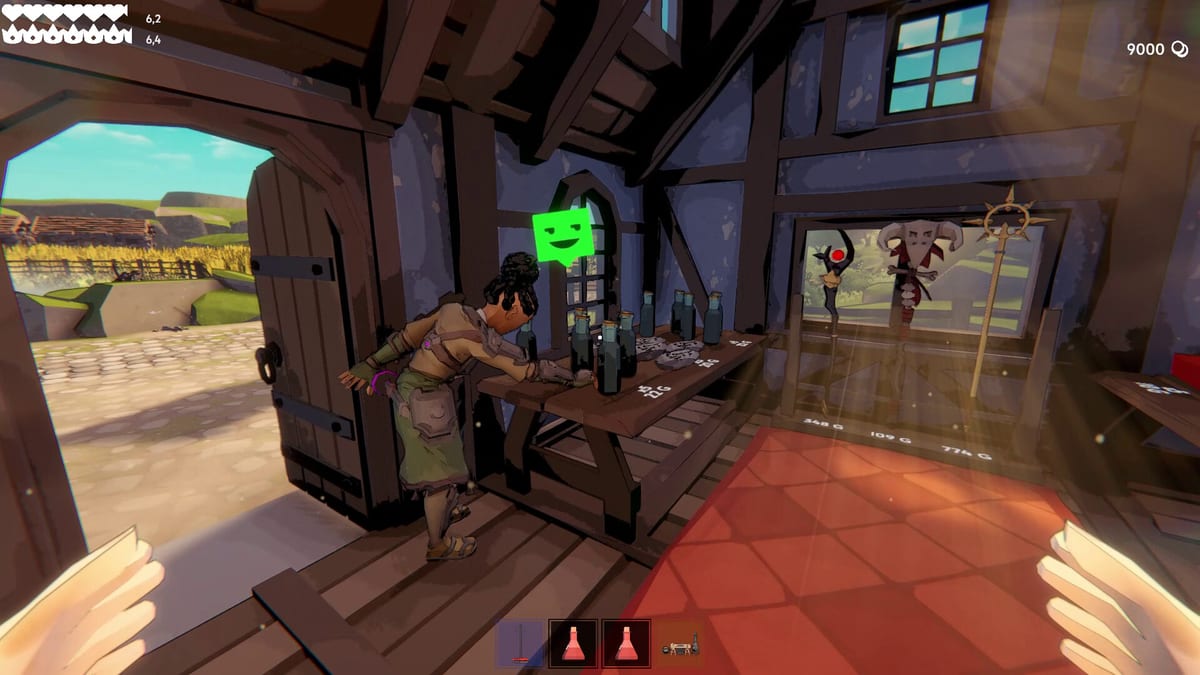
Pricing is the most consequential skill in Fell & Sell. A single well-priced item can fund a dungeon run. A shelf full of overpriced goods can bankrupt you in two sessions. This guide breaks down the complete pricing formula so you understand exactly what drives customer willingness to pay.
The pricing formula
Every transaction in Fell & Sell resolves through this formula:
Final Price = Base Value x (1 + Prestige Bonus) x (1 + Decoration Bonus) x Demand Multiplier x (1 - Excess Penalty)
Each variable is explained below.
Base Value
Base value is the inherent worth of an item, determined by rarity tier and item category. Weapons and armor have higher base values than raw materials. Legendary items have dramatically higher base values than common drops.
Base value is fixed — you cannot change it. Your job is to maximize every other variable.
Prestige Bonus
Prestige is your shop is reputation score, built through total sales volume over time. Every gold piece of sales contributes to prestige growth. Higher prestige means customers are generally more impressed by your shop and more willing to spend.
Prestige bonus starts at 0% and compounds upward. By the late game, prestige bonuses can reach 40-50%, effectively multiplying your income on every sale without any extra work.
Decoration Bonus
Decoration bonuses are category-specific price multipliers. A weapon display case boosts the perceived value of all weapons on your shelf. An armor stand does the same for armor.
Decoration bonuses are the fastest way to increase your effective margins. A 30% decoration bonus on a category means 30% more gold per sale in that category — and decoration bonuses stack additively within categories.
Demand Multiplier
Demand reflects the broader market. When many players are selling a particular item type, supply increases and the demand multiplier drops. When that item type is scarce, the multiplier rises.
You cannot directly see the demand multiplier, but you can observe it through sales velocity. If items that used to sell in one session now sit for three, demand has dropped. If a new item type sells instantly while others sit, demand for that type is high.
Excess Penalty
When your shop is saturated with a particular item type, each additional item of that type suffers an excess penalty. Having twelve swords on the shelf makes each new sword sell for less than the previous one.
Avoid saturation by maintaining inventory diversity. Do not flood one category. Keep multiple item types in rotation.
Practical application
Knowing the formula is one thing. Applying it daily is another.
When stocking your shop: spread inventory across categories to avoid excess penalty. Heavily decorate the categories where your inventory is heaviest. Price higher in categories where you have strong decoration bonuses — the margin is there to capture.
Between runs: check your shelf. If something has been sitting longer than usual, either reduce the price or wait for demand to naturally recover. Do not let inventory sit indefinitely — the excess penalty compounds over time.
After decoration upgrades: raise prices in the newly decorated category. Your decoration bonus has increased, which means customers will pay more without complaining. Capture that value.
Related guides
The Decoration Buffs guide has the full list of decorations and their bonuses.
The How to Sell Items guide covers market-reading tactics and pricing psychology.
The How to Make Money guide places pricing within the broader economic strategy.
Questions fréquentes
Réponses rapides aux questions les plus courantes.
Can I see the exact formula numbers?
No — some variables like demand multiplier are intentionally hidden. Use sales velocity as a proxy: fast sales mean favorable conditions, slow sales mean you need to adjust price or wait.
Should I always price at the formula maximum?
Not always. High prices slow reputation building and can create inventory saturation faster. Use premium pricing for rare items and high-prestige situations. Use modest pricing to build customer flow when starting out.
Does the formula change between updates?
Balance changes to the formula may occur after game updates. We update this guide within 24 hours of any pricing-related patch.
How do I check my current prestige bonus?
Your current prestige level is visible in your shop management screen. The exact percentage bonus is not displayed, but the tier name gives you a sense of where you stand.