Fell & Sell vs Moonlighter
Same core fantasy — the merchant IS the adventurer. But the feel is very different.
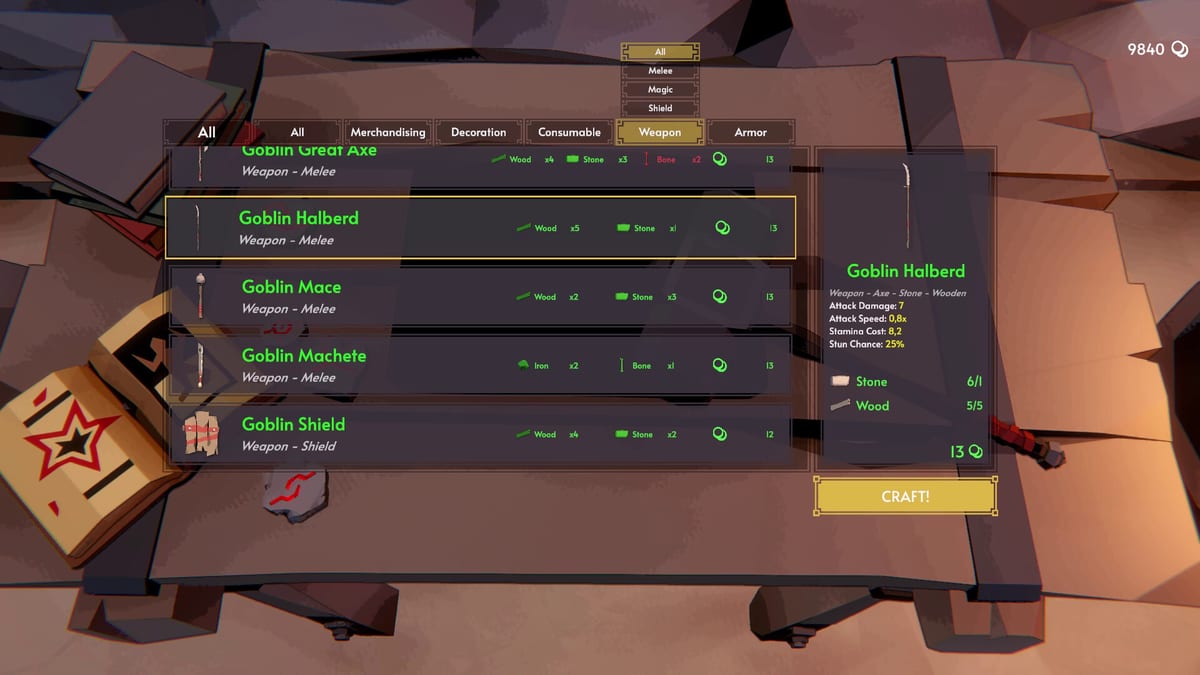
Since the August 26 launch, the search data is unambiguous: Moonlighter is the breakout related query for Fell & Sell — the game people reach for to explain what it is. Fair enough: both games are built on the merchant-is-the-adventurer loop. But playing them feels very different.
Why this comparison keeps coming up
Both games send you into dungeons to grab loot and sell it in your own shop. That shared core is enough to make Moonlighter the default reference point for anyone describing Fell & Sell. The comparison is fair — and worth making carefully, because the two games diverge sharply once you are past the elevator pitch.
Head to head
Perspective
Fell & Sell is first-person 3D. Moonlighter is a top-down 2D pixel-art game. This is not a cosmetic difference — it changes how you read combat, how you navigate space, and how physical the game feels.
Combat
Fell & Sell is fast hack-and-slash with dual-wielding, weapon weight, and a dodge that feels snappy. Moonlighter is deliberate dodge-roll action with more timing and less aggression. Fell & Sell’s combat rewards forward pressure; Moonlighter rewards patience and precision.
Dungeon structure
Fell & Sell uses procedural floors with a push-deeper-or-leave choice at the end of each floor: cash out and bank, or draft a perk and keep going. Moonlighter has five themed dungeons with set progression — you clear one dungeon completely before the next opens. No floor-by-floor extract decision.
Run modifiers
Fell & Sell has dungeon altars that can fundamentally reshape a run mid-flight. Midas Touch turns heavy loot into gold. Tiny Size shrinks you and opens new paths. Manic and Depressed states flip your combat math entirely. Moonlighter’s runs are modified by items and gear — the dungeon itself does not change the rules mid-run.
A second biome
Fell & Sell adds a living forest with weather events and goblin raids outside the dungeon system. Moonlighter has no equivalent — five themed dungeons, no outdoor layer.
Death penalty
Fell & Sell: lose your entire unbanked haul. The bank is the only safety. Moonlighter: lose most carried loot outside of dedicated slots, but there are protected slots and a clearer boundary between what you keep and what you risk.
Shop simulation depth
Fell & Sell lets you set prices freely. Customer mood reacts live as you adjust. Prestige, decoration bonuses, and supply/demand all shift what customers accept — the pricing skill stays active throughout the game. Moonlighter’s pricing is a discovery puzzle: watch customer reactions to find each item’s price point, then upgrade the shop between runs.
Furniture and decoration
Fell & Sell furniture grants both shop appeal AND permanent combat buffs that carry into dungeons. Moonlighter furniture is cosmetic and economic — it does not affect dungeon performance.
Developer and price
Fell & Sell is by Art Games Studio (with PlayWay), released August 26 2026, at $9.99 base. Moonlighter is by Digital Sun, released in 2018, at $19.99 base and frequently discounted. As of August 2026, Moonlighter is on PC, consoles, and mobile. Fell & Sell is PC-only.
The real difference: pace and body
Moonlighter is a tidy, readable loop — a calm shop morning and a precise dungeon night. Fell & Sell is messier and more physical: enemies swarm in first person, weapons have weight (literally — inventory weight interacts with weapon pickup), and its roguelite altar modifiers can bend a run sideways. If Moonlighter is a metronome, Fell & Sell is a bar fight that ends in bookkeeping.
The shop halves differ the same way. Moonlighter’s pricing is a discovery puzzle with an answer per item. Fell & Sell’s economy is a moving target — supply, demand, prestige and decoration bonuses all shift what customers accept, so pricing stays a skill rather than a solved table.
Which one should you play?
Choose Moonlighter if you want the genre’s landmark title, portable and polished, eight years of patches and every platform. It is a complete, calm experience with no launch-week rough edges.
Choose Fell & Sell if you want the same fantasy with modern roguelite teeth, a live economy, and the caveat that it is brand new, PC-only, and still receiving rapid patches. Two patches shipped on launch day alone.
Other games with the same loop
If the loot-then-sell fantasy is the draw, these games each cover a different slice of it:
- Recettear: An Item Shop’s Tale — the cult classic of the genre, with a narrative structure and item-shop focus
- Potion Craft — the selling half is alchemy, with a rich pricing and discovery loop
- Travellers Rest — tavern-keeping instead of dungeon-diving, with survival and management elements
Related pages
See the Pricing Guide for how Fell & Sell’s live customer economy actually works. See the Beginner Guide if you want to start with Fell & Sell rather than compare. See Updates for the rapid patch history from launch week.
Frequently Asked Questions
Quick answers to the most common questions.
Is Fell & Sell just a copy of Moonlighter?
No. Both games share the core merchant-adventurer loop, but Fell & Sell is first-person 3D with hack-and-slash combat, procedural dungeon floors, altar run modifiers, a living forest biome, and a live pricing economy. Moonlighter is top-down pixel art with deliberate dodge-roll combat, fixed dungeon progression, and a price-discovery shop system.
Which game is harder?
Fell & Sell's death penalty is steeper — unbanked haul is gone entirely — and first-person combat with enemy swarms is more chaotic. Moonlighter's dodge-roll is more deliberate and its death penalty has protected inventory slots. That said, Fell & Sell's risk is also more rewarding: the shop economy and furniture combat buffs give you more agency over long-term power.
Can I play Fell & Sell on console?
Not yet. As of the September 2026 patch, Fell & Sell is PC-only. Moonlighter is available on PC, consoles, and mobile.
Does Fell & Sell have the same pricing system as Moonlighter?
No. Moonlighter uses a price-discovery model where you watch customer reactions to find the right price for each item. Fell & Sell lets you set prices freely, but customer mood, shop prestige, decoration bonuses, and supply/demand all shift what customers accept in real time — pricing stays an active skill throughout.
What does Fell & Sell have that Moonlighter does not?
Dungeon altar modifiers that reshape your run mid-flight, a living forest biome outside the dungeon system, furniture that grants permanent combat buffs, procedural floor-by-floor extract decisions, and a live shop economy that reacts to your pricing in real time.